Important Notice
  • Home
  • /
  • Rolling Stock Code
Rolling Stock Code

CHAPTER 1 (Organization of Rolling Stock Production & Maintenance Department)

101. Corporate Objectives

The Corporate Objectives of Indian Railways are:

a. To provide Rail Transport for both Passenger and Goods adequate to meet demand in areas where Railway operation confers optimum benefit to the economy, having due regard to the Government's policy of development of backward areas.

b. To provide such Rail Transport at the lowest cost consistent with—

i. Requirements of the Railway users and Safety Operations.

ii. Adequate provision for replacement of assets and some provision for development of business.

iii. The least amount of pollution of the environment.

c. To work in association with or utilize other modes of transportation, such as Pipelines and Road Transport, and to engage in ancillary activities necessary to sub-serve the above two objectives.

d. To establish a Corporate Image of the Railways as being an up-to-date Business Organization with the interest of the public and of the nation as its prime objectives.

e. To develop organizationally effective personnel with pride in their work and faith in the management.

101. कॉर्पोरेट उद्देश्य (Corporate Objectives)

भारतीय रेल (Indian Railways) के कॉर्पोरेट उद्देश्य निम्नलिखित हैं—

a. यात्री (Passenger) एवं माल (Goods) दोनों के लिए ऐसी रेल परिवहन (Rail Transport) सुविधा उपलब्ध कराना, जो उन क्षेत्रों की मांग को पूरा करे जहाँ रेल संचालन से अर्थव्यवस्था (Economy) को अधिकतम लाभ (Optimum Benefit) प्राप्त होता हो तथा पिछड़े क्षेत्रों के विकास (Development of Backward Areas) संबंधी सरकार की नीति का उचित ध्यान रखा जाए।

b. ऐसी रेल परिवहन सेवा न्यूनतम लागत (Lowest Cost) पर उपलब्ध कराना, जो निम्नलिखित के अनुरूप हो—

i. रेल उपयोगकर्ताओं (Railway Users) की आवश्यकताओं तथा सुरक्षित संचालन (Safety Operations) के अनुरूप।

ii. संपत्तियों (Assets) के प्रतिस्थापन (Replacement) के लिए पर्याप्त व्यवस्था तथा व्यवसाय के विकास (Development of Business) के लिए आवश्यक प्रावधान।

iii. पर्यावरण प्रदूषण (Environmental Pollution) को न्यूनतम स्तर पर रखना।

c. अन्य परिवहन साधनों (Other Modes of Transportation) जैसे पाइपलाइन (Pipelines) एवं सड़क परिवहन (Road Transport) के साथ मिलकर कार्य करना अथवा उनका उपयोग करना तथा उपरोक्त दोनों उद्देश्यों की पूर्ति के लिए आवश्यक सहायक गतिविधियाँ (Ancillary Activities) करना।

d. भारतीय रेल की एक आधुनिक (Up-to-date) व्यावसायिक संस्था (Business Organization) के रूप में कॉर्पोरेट छवि (Corporate Image) स्थापित करना, जिसका मुख्य उद्देश्य जनता एवं राष्ट्र के हितों की सेवा करना हो।

e. ऐसे संगठनात्मक रूप से प्रभावी (Organizationally Effective) कर्मचारियों (Personnel) का विकास करना, जिनमें अपने कार्य के प्रति गर्व (Pride in their Work) तथा प्रबंधन (Management) के प्रति विश्वास (Faith) हो।

102. Mission Areas for Rolling Stock Vertical

Note: The term Rolling Stock means Coaches, Wagons, Locomotives, EMU, DEMU, Trainset, MEMU, Tower Cars, Power Car, SPART, ART, ARMV, other Special Purpose Coaches & Wagons and Rolling Stocks.

Rolling Stock Vertical is primarily assigned with the responsibility for Design, Manufacture, Deploy and Maintain the Rolling Stock of Indian Railways. The Mission Areas for this activity are:

a. Evolving optimal designs for Rolling Stock, choosing the most economical option on a "Life Cycle Costing Basis".

b. Manufacture of the Rolling Stock at Production Units or External Manufacturing Units to stringent standards in a cost-effective manner.

c. Maintaining the moving assets, ensuring that they give optimal operational efficiency and safety throughout their full codal life.

d. Planning, Procurement and Maintenance of Machinery & Plant.

e. Ensuring realization of the full potential of the assets.

f. Adopting and maintaining the best practices in the industry with excellence in all areas of operation.

g. Arranging relief and rescue in any unlikely event of Railway disasters.

While pursuing the above mission, the orientation of Rolling Stock Production/Maintenance Vertical should remain in complete consonance with the Corporate Objectives of Indian Railways.

102. रोलिंग स्टॉक वर्टिकल (Rolling Stock Vertical) के मिशन क्षेत्र (Mission Areas)

नोट: Rolling Stock में Coaches, Wagons, Locomotives, EMU, DEMU, Trainset, MEMU, Tower Cars, Power Car, SPART, ART, ARMV तथा अन्य Special Purpose Coaches, Wagons एवं Rolling Stocks शामिल हैं।

Rolling Stock Vertical का मुख्य दायित्व भारतीय रेल के Rolling Stock का Design, Manufacture, Deploy तथा Maintenance करना है। इस कार्य के Mission Areas निम्नलिखित हैं—

a. Rolling Stock के लिए सर्वोत्तम डिज़ाइन (Optimal Designs) विकसित करना तथा Life Cycle Costing Basis पर सबसे किफायती (Most Economical) विकल्प का चयन करना।

b. Production Units अथवा External Manufacturing Units में Rolling Stock का निर्माण (Manufacture) कड़े मानकों (Stringent Standards) के अनुसार तथा कम लागत (Cost-effective Manner) में करना।

c. चल परिसंपत्तियों (Moving Assets) का Maintenance इस प्रकार करना कि वे अपनी पूरी Codal Life के दौरान अधिकतम परिचालन दक्षता (Optimal Operational Efficiency) तथा सुरक्षा (Safety) प्रदान करें।

d. Machinery & Plant का Planning, Procurement तथा Maintenance करना।

e. Assets की पूर्ण क्षमता (Full Potential) का अधिकतम उपयोग (Realization) सुनिश्चित करना।

f. उद्योग में सर्वोत्तम कार्य प्रणालियों (Best Practices) को अपनाना तथा बनाए रखना और संचालन के सभी क्षेत्रों (All Areas of Operation) में उत्कृष्टता (Excellence) प्राप्त करना।

g. रेल दुर्घटनाओं (Railway Disasters) जैसी किसी भी अप्रत्याशित स्थिति में Relief एवं Rescue की व्यवस्था करना।

उपरोक्त Mission को पूरा करते समय Rolling Stock Production/Maintenance Vertical का कार्य भारतीय रेल के Corporate Objectives के पूर्ण अनुरूप (Complete Consonance) होना चाहिए।


103. Organisation

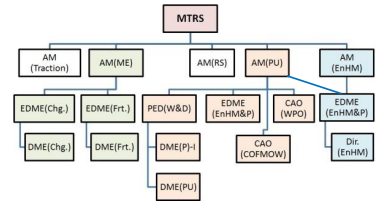
The Organizational Structure of the Rolling Stock Production/Maintenance Vertical is driven by the manufacture and maintenance philosophy of Rolling Assets and is shown in the chart below.


Area of Responsibility

  • EDME (Chg.) – Responsible for all activities from design of new coaches to condemnation of coaching stock.
  • EDME (Frt.) – Responsible for all activities from design of new wagons to condemnation of freight stock.
  • PED (W&D) – Responsible for all activities of Railway Workshops and for development/introduction of new/advanced/improved technologies in Rolling Stock.
  • EDME (EnHM & Projects) – Responsible for all activities of cleaning/housekeeping of passenger carrying Rolling Stock and is Nodal Officer on GCC Services. In addition, EDME (EnHM & Projects) is also responsible for execution of project work related to Rolling Stock.
  • CAO (COFMOW) – Responsible for all activities for procurement of Machinery & Plant (M&P) and other technological items for Zonal Railways and Production Units (PUs).
  • CAO (WPO) – Responsible for all activities for establishing new infrastructural establishment for Rolling Stock.

While the manufacturing practices in the Workshops are shaped by the strategies that characterize the internationally acclaimed World Class Industries, the maintenance philosophy balances between the following two extremes—

a. Corrective MaintenanceRunning the assets non-stop and attending only when they break down, thus enhancing availability at the cost of reliability.

b. Preventive MaintenanceWithdrawing the assets from traffic for frequent and prolonged maintenance attention, thus enhancing reliability at the cost of availability.

Choosing a mid-course between the two, Indian Railways contain the ineffective hours within the stipulated targets by restricting the frequency and duration of preventive maintenance schedules.

Emerging technologies with fit and forget components, enhanced quality conscience and principles of predictive maintenance further help in reducing the quantum of preventive maintenance with higher and higher levels of availability.

Activities Function of
a. Evolve specifications and designs of the Rolling Stock and choosing the most economical option on a "Life Cycle Costing Basis". Railway Board and RDSO
b. Manufacture Production Units, Zonal Railway Workshops and External Manufacturers
c. Periodical Major Overhauls and Mid Life Rebuilds (MLRs) (See Annexure 1.1) Zonal Railway Workshops and MLR Shops
d. Top Overhauls and Minor Schedules, Intermediate and Routine Overhauls Locomotive Sheds, Distributed Power Rolling Stock (DPRS) Sheds and the Carriage, EMU, MEMU, Train Set and Wagon Depots
e. Cleaning, Topping up Supplies, Yard or Pit Line Examination Attention Locomotive Sheds, Distributed Power Rolling Stock (DPRS) Sheds and the Carriage and Wagon, EMU, MEMU, Train Set Depots, Fuel Pads and Outstation Depots

103. संगठन (Organisation)

Rolling Stock Production/Maintenance Vertical की संगठनात्मक संरचना (Organizational Structure), Rolling Assets के निर्माण (Manufacture) एवं अनुरक्षण (Maintenance) की कार्य-दर्शन (Philosophy) पर आधारित है तथा इसे नीचे दिए गए चार्ट में दर्शाया गया है।


कार्य का दायित्व (Area of Responsibility)

  • EDME (Chg.)नए Coaches के Design से लेकर Coaching Stock के Condemnation तक की सभी गतिविधियों के लिए उत्तरदायी है।
  • EDME (Frt.)नए Wagons के Design से लेकर Freight Stock के Condemnation तक की सभी गतिविधियों के लिए उत्तरदायी है।
  • PED (W&D)Railway Workshops की सभी गतिविधियों तथा Rolling Stock में नई/उन्नत/सुधारित तकनीकों (New/Advanced/Improved Technologies) के विकास एवं परिचय (Development/Introduction) के लिए उत्तरदायी है।
  • EDME (EnHM & Projects)Passenger Carrying Rolling Stock की Cleaning एवं Housekeeping से संबंधित सभी गतिविधियों के लिए उत्तरदायी है तथा GCC Services के Nodal Officer हैं। इसके अतिरिक्त, Rolling Stock से संबंधित Project Works के Execution के लिए भी उत्तरदायी हैं।
  • CAO (COFMOW)Zonal Railways एवं Production Units (PUs) के लिए Machinery & Plant (M&P) तथा अन्य Technological Items की Procurement से संबंधित सभी गतिविधियों के लिए उत्तरदायी है।
  • CAO (WPO)Rolling Stock के लिए नई Infrastructure Establishments की स्थापना (Establishing New Infrastructural Establishment) से संबंधित सभी गतिविधियों के लिए उत्तरदायी है।

Railway Workshops में Manufacturing Practices, अंतरराष्ट्रीय स्तर पर प्रतिष्ठित (Internationally Acclaimed) World Class Industries की रणनीतियों (Strategies) पर आधारित होती हैं, जबकि Maintenance Philosophy निम्नलिखित दो चरम स्थितियों (Extremes) के बीच संतुलन बनाए रखती है—

a. Corrective MaintenanceAssets को बिना रोके लगातार चलाना तथा केवल खराब (Break Down) होने पर ही Maintenance करना, जिससे Availability बढ़ती है लेकिन Reliability कम हो जाती है।

b. Preventive MaintenanceAssets को बार-बार तथा लंबे समय के लिए Traffic से हटाकर Maintenance करना, जिससे Reliability बढ़ती है लेकिन Availability कम हो जाती है।

इन दोनों के बीच मध्यम मार्ग (Mid-course) अपनाते हुए Indian Railways, Preventive Maintenance Schedules की आवृत्ति (Frequency) एवं अवधि (Duration) को सीमित रखकर Ineffective Hours को निर्धारित लक्ष्यों (Stipulated Targets) के भीतर नियंत्रित रखती है।

Fit and Forget Components, बेहतर Quality Conscience तथा Predictive Maintenance के सिद्धांतों (Principles) जैसी Emerging Technologies, Preventive Maintenance की आवश्यकता (Quantum) को और कम करने में सहायता करती हैं तथा Availability के स्तर (Levels of Availability) को लगातार बढ़ाती हैं।

गतिविधियाँ (Activities)
उत्तरदायी संगठन (Function of)
a. Rolling Stock के Specifications एवं Designs विकसित करना तथा Life Cycle Costing Basis पर सबसे किफायती (Most Economical) विकल्प का चयन करना।
Railway Board एवं RDSO
b. Rolling Stock का निर्माण (Manufacture)
Production Units, Zonal Railway Workshops एवं External Manufacturers
c. Periodical Major Overhauls तथा Mid Life Rebuilds (MLRs) (Annexure 1.1 देखें)
Zonal Railway Workshops एवं MLR Shops
d. Top Overhauls, Minor Schedules, Intermediate एवं Routine Overhauls
Locomotive Sheds, Distributed Power Rolling Stock (DPRS) Sheds तथा Carriage, EMU, MEMU, Train Set एवं Wagon Depots
e. Cleaning, Topping up Supplies, Yard या Pit Line Examination Attention
Locomotive Sheds, Distributed Power Rolling Stock (DPRS) Sheds तथा Carriage & Wagon, EMU, MEMU, Train Set Depots, Fuel Pads एवं Outstation Depots

104. Railway Board and RDSO

The complete Rolling Stock Vertical reports to MTRS.

AMs – ME, PU, Traction & RS report to MTRS.

The various Directorates in the Railway Board, in charge of specific areas of Rolling Stock Workshops & Development Functions, not only stipulate the philosophy for manufacture and maintenance, but also keep a close watch on the performance of the Railways.

The Motive Power, PS & EMU, Carriage, Wagon and Testing Directorates in the RDSO act as the depository of all technical knowledge in their respective domains and issue technical directives to the Production Units and Zonal Railways, balancing between maintainability and ease of manufacturing.

104. रेलवे बोर्ड एवं RDSO

संपूर्ण Rolling Stock Vertical, MTRS को रिपोर्ट करता है।

AMs – ME, PU, Traction एवं RS, MTRS को रिपोर्ट करते हैं।

Railway Board के विभिन्न Directorates, जो Rolling Stock Workshops एवं Development Functions के विशिष्ट क्षेत्रों (Specific Areas) के प्रभारी हैं, वे Manufacture एवं Maintenance की Philosophy निर्धारित (Stipulate) करने के साथ-साथ Railways के Performance पर भी निकटता से निगरानी (Keep a Close Watch) रखते हैं।

RDSO के Motive Power, PS & EMU, Carriage, Wagon तथा Testing Directorates, अपने-अपने क्षेत्र (Domain) में संपूर्ण Technical Knowledge के Repository (Depository) के रूप में कार्य करते हैं तथा Production Units एवं Zonal Railways को Technical Directives जारी करते हैं, जिससे Maintainability एवं Ease of Manufacturing के बीच उचित संतुलन (Balance) बनाए रखा जा सके।


105. Production Units

Production Units are headed by General Managers/Chief Administrative Officers (CAO) assisted by Heads of Departments in Mechanical, Electrical, Accounts, Engineering, Security, Stores and Personnel Departments at the appropriate level.

Since Design and Quality are very important, there shall also be Chief Design Engineers.

The other broad organizational set up of Workshops, as discussed in Paragraphs 108 to 133 below, will apply mutatis-mutandis to Production Units.

105. उत्पादन इकाइयाँ (Production Units)

Production Units का नेतृत्व General Managers/Chief Administrative Officers (CAO) द्वारा किया जाता है, जिनकी सहायता Mechanical, Electrical, Accounts, Engineering, Security, Stores तथा Personnel Departments के Heads of Departments उपयुक्त स्तर पर करते हैं।

चूँकि Design एवं Quality का अत्यधिक महत्व है, इसलिए Chief Design Engineers भी नियुक्त किए जाते हैं।

Paragraph 108 से 133 में वर्णित Workshops की व्यापक संगठनात्मक व्यवस्था (Broad Organizational Set Up), आवश्यकतानुसार परिवर्तन (Mutatis Mutandis) के साथ Production Units पर भी लागू होगी।


106. Zonal Railways

The General Manager of Zonal Railway is the Head of the Administration and the Organization.

In discharge of his duties, he is assisted by a number of Principal Officers, who are Departmental Heads of their respective departments.

106. जोनल रेलवे (Zonal Railways)

Zonal Railway के General Manager, प्रशासन (Administration) एवं संगठन (Organization) के प्रमुख (Head) होते हैं।

अपने दायित्वों (Duties) के निर्वहन में उनकी सहायता अनेक Principal Officers करते हैं, जो अपने-अपने Departments के Departmental Heads होते हैं।


107.